Aligning and refining
How do you consolidate a siloed ecosystem?
Challenge
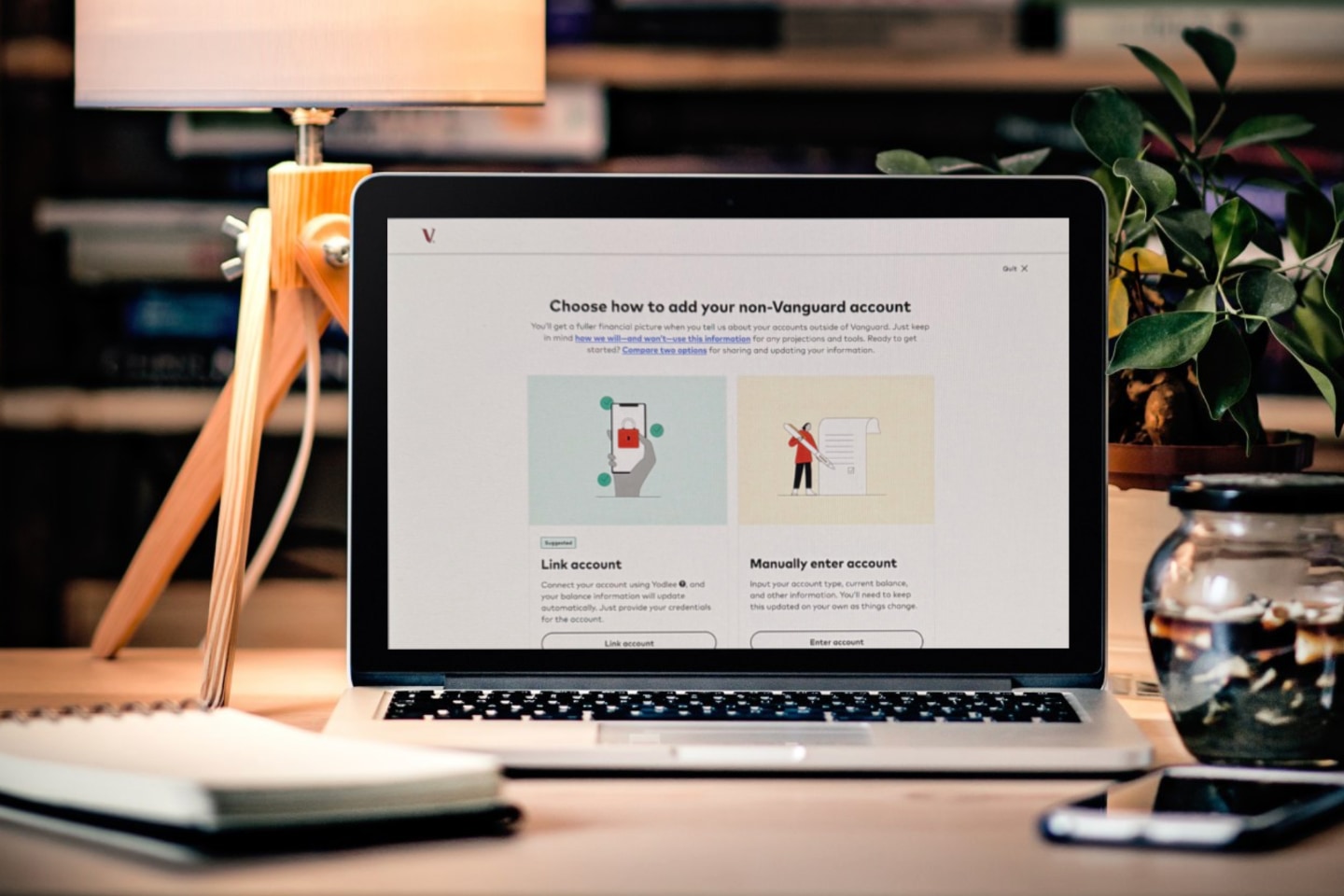
My team was asked to research and improve our method for clients to add assets and other financial data held outside our institution. Our goal was to create a unified way for clients to better understand their full financial picture, whether managing their own investments or working with a digital or human advisor.
The methods being used were developed over several years by different teams working in isolation. Each solution catered to specific product lines and did not use consistent methodologies, leading to expensive-to-maintain codebases, inconsistent processes, and user confusion. Clients who used multiple products within the company often had to enter the same external account data multiple times, each in a slightly different format. This not only led to frustration and confusion for clients but also caused duplicate accounts to be added unintentionally, creating calculation errors in financial tools.
Our goal was to create a unified solution that met the diverse needs of each product line, reduced client confusion, and lowered development and maintenance costs.
My Role
I led the UX strategy and experience direction for this initiative, working across multiple product lines and divisional teams to frame the problem, align stakeholders on a shared approach, and drive the work from discovery through implementation. My core contribution was creating the conditions for alignment — navigating competing priorities across teams that had been working in isolation — before any design decisions were made. I directed a team of a UI designer, content strategists, and a researcher, while also partnering with developers, product managers, and divisional leaders across the organization.
Process
I began by conducting a thorough analysis of existing processes across multiple divisions. Working closely with our researcher, we developed a test plan. Using UserTesting.com, we conducted usability studies with our clients. The testing helped us capture pain points directly from users and identify critical issues.
Based on our research, I proposed creating a flexible and scalable MVP for the external account collection process. This MVP served as a test case and became the foundation for the new system. I worked closely with content strategists to map out the various data requirements across the organization, identifying all necessary data points and ensuring our solution could accommodate them.
We developed a modular, scalable solution, allowing different divisions to access and use the external account data they needed without creating redundant or conflicting processes. Collaboration was crucial. Our stakeholders included other UX teams, project managers, and senior leaders. By maintaining regular communication, we ensured that our solution aligned with both user needs and business objectives. We tested our solution both internally with stakeholders and externally with clients, ensuring it met everyone's needs before finalizing the design.
Results
Our streamlined interface successfully resolved the initial challenges. Clients now experience a consistent, intuitive process for adding external accounts, eliminating confusion and the risk of duplicate accounts. Beyond solving the initial problem, our unified approach has created new opportunities for other teams to access and leverage external account data, enabling future enhancements across the organization. This project not only improved client experience but also established a scalable, efficient framework for external account management that can support future innovation.